
Criminal Cases in the Allamakee County Courts
Allamakee County criminal court cases are heard in Iowa’s unified District Court system. The Iowa District Court for Allamakee County belongs to Judicial District 1A. District judges hear felonies and serious or aggravated misdemeanors. Associate district judges and magistrates handle assigned misdemeanors, initial appearances, preliminary matters, and traffic cases. There is no separate Allamakee County criminal court or city municipal criminal court with a second docket. That single statewide structure helps a searcher know where filed charges should appear.
The Clerk of District Court is the custodian of each official case file. The clerk works at 110 Allamakee Street NW in Waukon and can be reached at 563-568-6351. The county attorney files and prosecutes charges, but that office does not keep the court’s final docket. When a question concerns the complaint, trial information, plea, judgment, or sentence, ask the clerk rather than the sheriff or county recorder.
Allamakee Case Search Online
Iowa Courts Online is the free public index for Allamakee County court records. Choose the trial-court search, enter a name or exact Case ID, and set County to Allamakee. Official help says public trial cases after 1998 are included. Entries update in real time after the clerk enters them, though a paper filed today may still take time to reach the docket.
The state search screen shown below helps distinguish Iowa Courts Online, the public lookup, from Iowa eFile, which is the filing system.
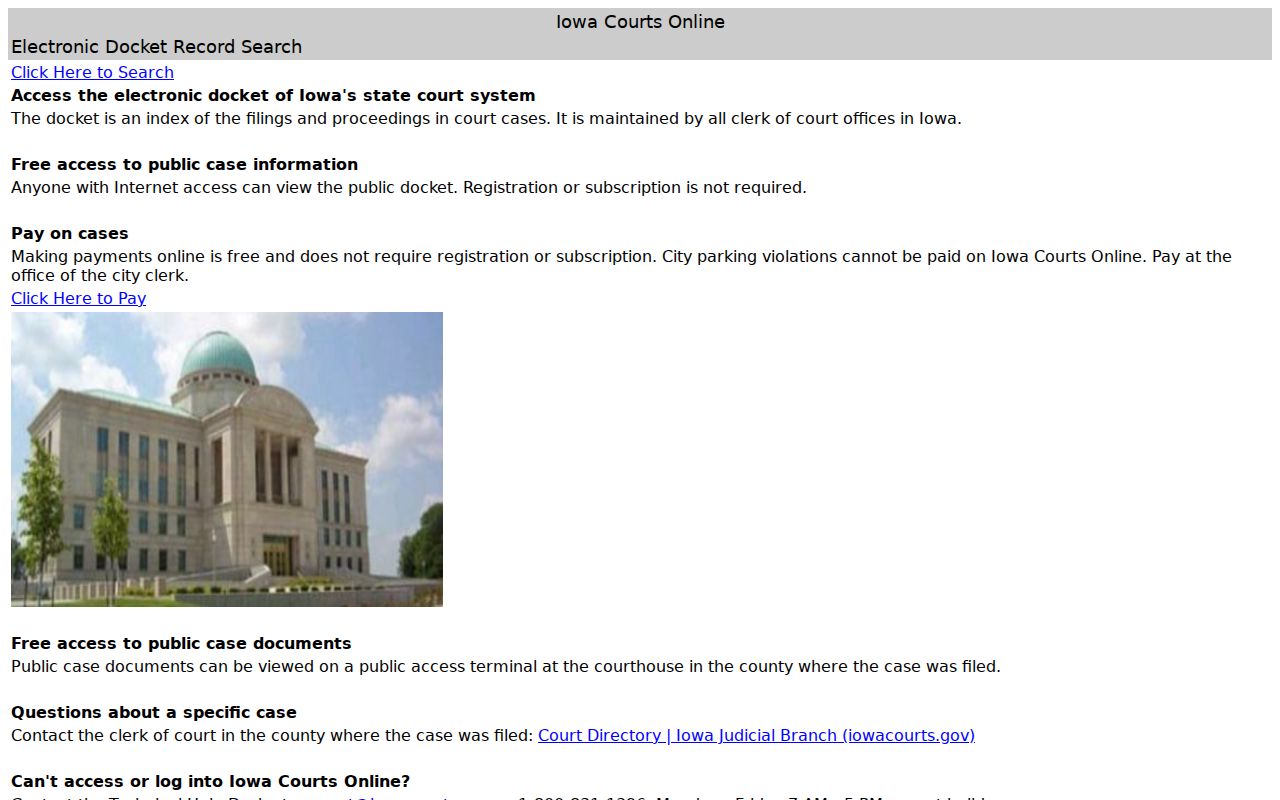
The Case ID opens the useful detail: title, parties, lawyers, charge entries, event dates, outcomes, and financial entries. Read the docket before asking the clerk for a document so the request can name the case and filing precisely.
How to Search Case Records
A name can produce similar people, spelling variants, and unrelated counties. An exact case number is the strongest key. If only a name is known, narrow the result to Allamakee County and compare the case type, filing date, attorneys, and charge history. The public docket may not show enough birth-date information to resolve identity by itself.
- Open Iowa Courts Online and select the Trial Court search.
- Enter the party’s name, or use the exact Case ID when known.
- Set County to Allamakee and apply a criminal or traffic case type if useful.
- Open the blue Case ID and review each charge, event, and disposition separately.
- Call or visit the Allamakee clerk for public documents, certification, older files, or an unclear entry.
The visible controls support broad and exact searches. CAPTCHA or session checks may appear, and punctuation can change a name match.
| Field Label | Type | Required | Notes |
|---|---|---|---|
| Case Type | Tab/category | No | Choose Trial Court for Allamakee criminal cases. |
| Name | Text | Search-dependent | Enter last and first name; spelling affects results. |
| Case ID / Number | Text | Alternative | Use the exact value when available. |
| County | Dropdown | Recommended | Select Allamakee to remove other Iowa counties. |
| Case Type | Dropdown | Optional | Criminal or traffic categories can narrow results. |
| Search / Clear | Buttons | No | Runs the query or removes the criteria. |
Allamakee Court Documents Offline
An online docket is not the whole Allamakee County criminal case file. Public electronic trial documents are generally viewed at the courthouse public-access terminal. The clerk counter can also help with a copy or certification request. County offices publish weekday hours of 8:00 a.m. to 4:00 p.m. Call first about the current copying charge, access needs, and holiday closures because the research found no stable county criminal-copy fee schedule.
The Allamakee County Attorney’s official page places the prosecutor in the same courthouse and directs fine-payment and court questions to the clerk on the second floor.
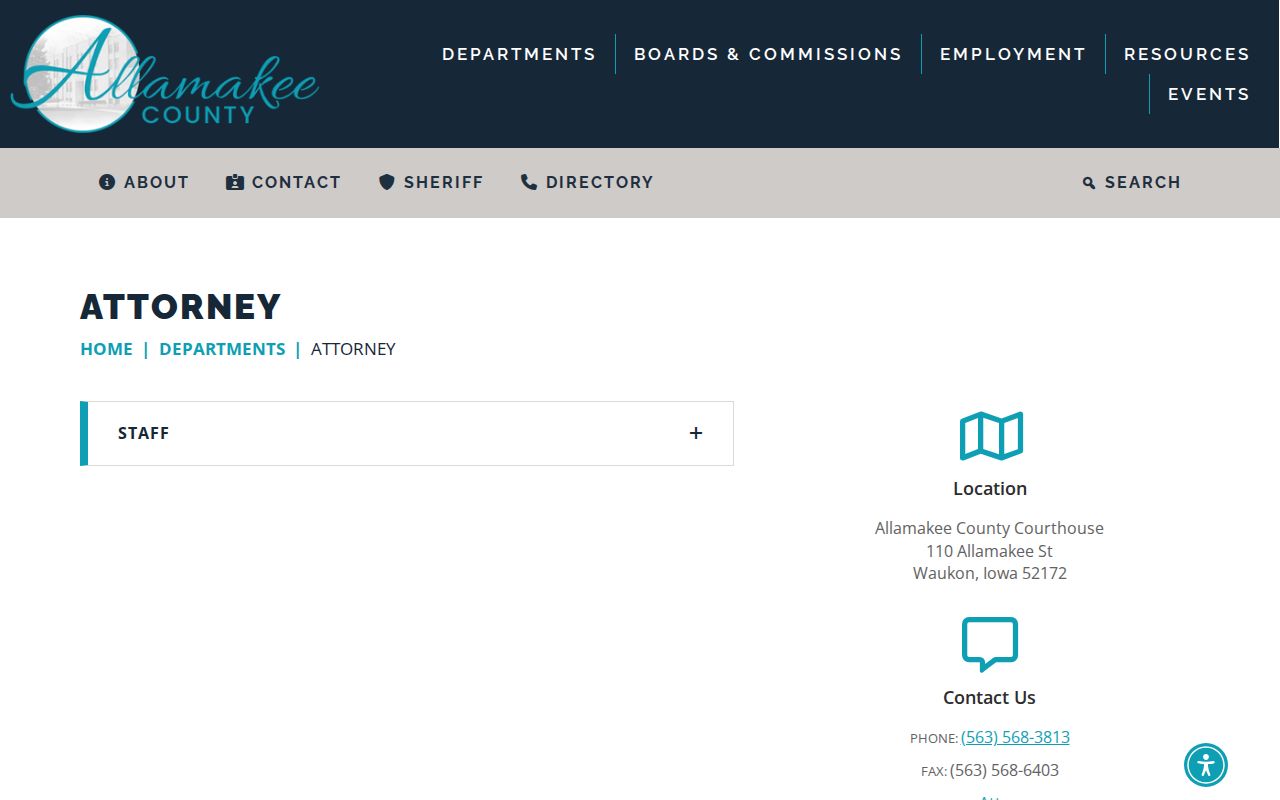
That routing matters. The prosecutor decides charges, while the clerk preserves what was filed and how the court resolved it. A chapter 22 request sent to the sheriff will not produce a certified District Court judgment.
Note: Ask for the complaint, trial information, judgment, or sentencing order by name instead of requesting an undefined “full record.”
What the Case File Shows
A case file records prosecution, not just arrest. It starts with the charging paper and then adds the court’s dated acts. One case can have several counts with different results. A dismissal on one charge does not decide another charge, and a case-level label can hide that distinction. Financial balances show court obligations, not present jail custody.
| Case Number & Court | Identifies the Allamakee filing, case type, and assigned Iowa court. |
|---|---|
| Charging Document | The complaint, trial information, or indictment states charges formally filed. |
| Docket Entries | A dated register of filings, notices, orders, motions, and court action. |
| Hearing Dates | Arraignment, pretrial, plea, trial, sentencing, and review settings. |
| Disposition & Judgment | The result for each count, such as dismissal, acquittal, deferred judgment, plea, or conviction. |
| Sentence & Conditions | Custody, probation, fines, costs, restitution, and other terms ordered by the court. |
Useful docket terms have exact roles. “Disposition” means the outcome of a charge. “Arraignment” is the charge-and-plea hearing. A “deferred judgment” withholds judgment while conditions are completed. These terms should be read alongside the entry date and the affected count.
Pre-1998 Allamakee Court Records
The public online coverage line is 1998. A missing older Allamakee County case should therefore be taken to the clerk, not treated as proof that no file exists. Give the person’s full name, an approximate year, the alleged charge if known, and any old case number. The clerk can determine whether the matter is archived, electronic, confidential, or indexed under a different format.
Allamakee’s courthouse history makes this distinction more than a technical detail. Modern cases sit in the present courthouse and statewide system, while much older records may require archival handling. Searchers should avoid assuming that the online database reaches back through the county’s full court history.
A copy request should name the exact filing when possible. The judgment shows the court’s final ruling. A sentencing order states the imposed terms. The complaint or trial information shows what was formally charged, and the chronological docket shows how the case moved. Asking for those items can be faster and less costly than requesting every page in a large file.
Stages of a Criminal Case
The arresting agency begins an investigation, but the prosecutor decides what charge to file. An initial appearance addresses rights, counsel, bond, and the next step. The prosecutor may then file a complaint or trial information, or a grand jury may return an indictment. Arraignment records the plea. Discovery and motions follow before a negotiated plea or trial. Judgment, sentence, and any appeal create later entries.
Case flow: Charges Filed › Arraignment › Pretrial › Plea or Trial › Disposition › Sentencing
A booking allegation can be amended, declined, or dismissed. For that reason, the Allamakee County arrest history and the court docket answer different questions. The final disposition must come from the case record.
Allamakee Federal Criminal Cases
Federal cases from Allamakee County do not appear in Iowa Courts Online. The county lies in the U.S. District Court for the Northern District of Iowa. Its official site identifies the court and its services.
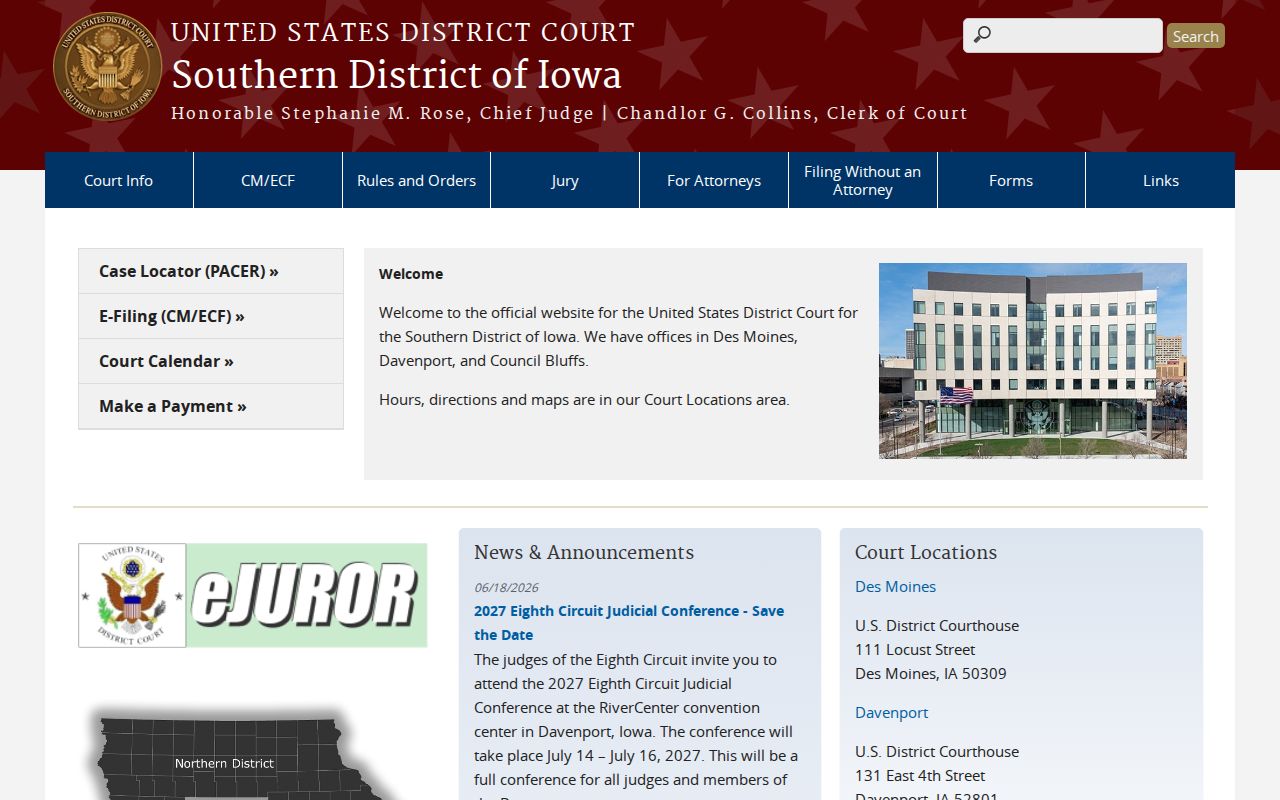
The federal layer is separate from Judicial District 1A. A state name search with no result says nothing about a Northern District prosecution.
Federal dockets and filings route through PACER. Registration is required. PACER publishes a charge of $0.10 per page, applies a cap to many documents, and waives quarterly charges of $30 or less under its current schedule.
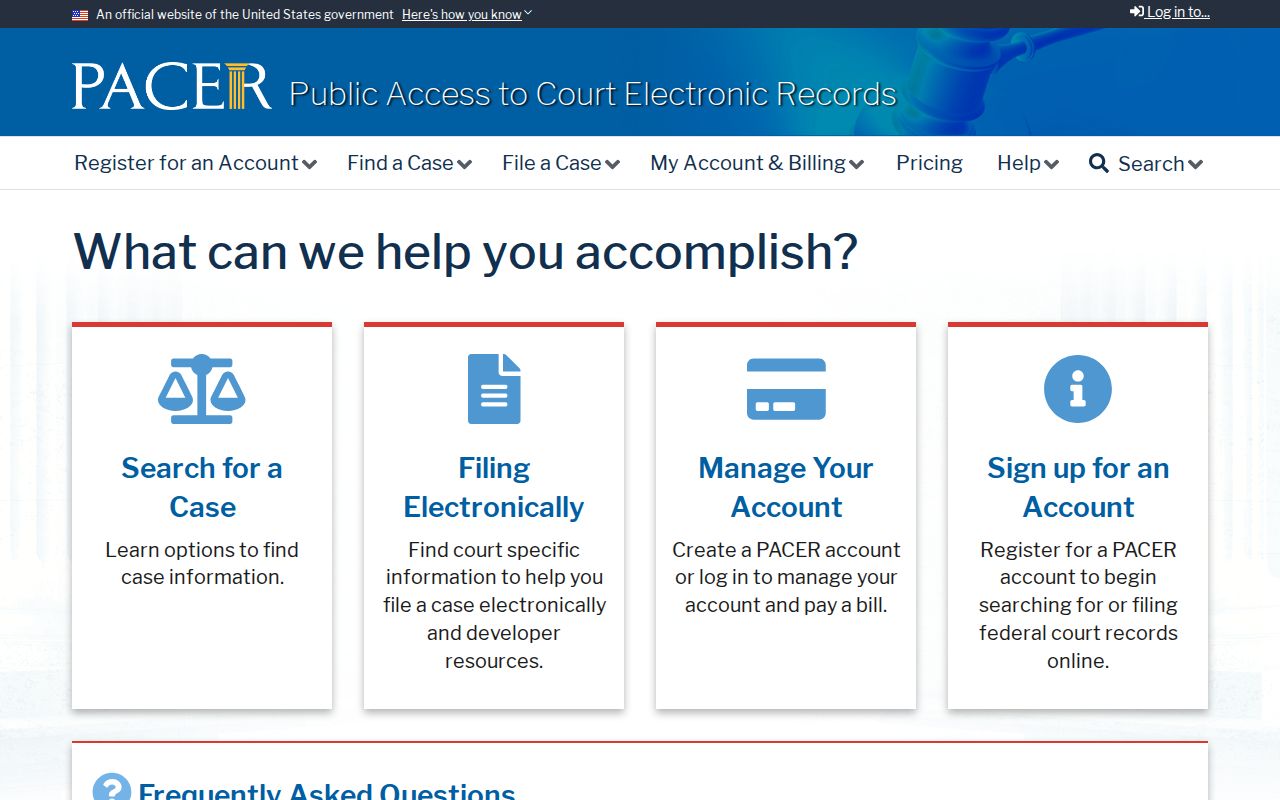
PACER should be used only for the federal docket. It does not replace the Allamakee clerk, Iowa Courts Online, or a DCI statewide criminal-history check.
Read Allamakee Charges Separately
A reliable Allamakee County case review follows each count rather than quoting the first charge on the screen. The booking desk records what the officer presents. The county attorney may file a different charge, amend it, or decline it. The court can then dismiss one count, accept a plea on another, and enter judgment on a third. Each result needs its own date and source.
“Dismissed” means the charge ended without a conviction. “Acquitted” means the fact finder returned a not-guilty result. Neither should be restated as a conviction. A deferred judgment is also distinct: Iowa may later make the court record confidential after successful discharge, while DCI retains a discharged nonconviction entry under its own rules.
Access & Restrictions
Iowa’s public-access framework does not make every Allamakee County court record open. Iowa Code chapter 22 supports access to lawful public records, subject to confidentiality rules. Juvenile cases, sealed or expunged matters, protected victim information, and confidential filings can be withheld from ordinary public view. Court Rules chapter 16 and the Judicial Branch access policy also control electronic access.
If a known case is absent, first check spelling, county, and case number. Then call the clerk. Ask whether the file is pre-1998, confidential, not yet entered, or held in another jurisdiction. A paper delivered to the courthouse can take days to reach the docket even though entered data displays in real time. No-result language should remain narrow: the public search returned no matching, available entry under those terms.
Expungement can also change public access. Iowa Code chapter 901C covers qualifying dismissals, acquittals, and a limited class of misdemeanor convictions, while section 907.9 addresses discharge after a deferred judgment. A qualifying order can make the court case confidential. It does not authorize a searcher to infer that an absent result means the underlying event never occurred, and it does not force every agency system to display identical information.